
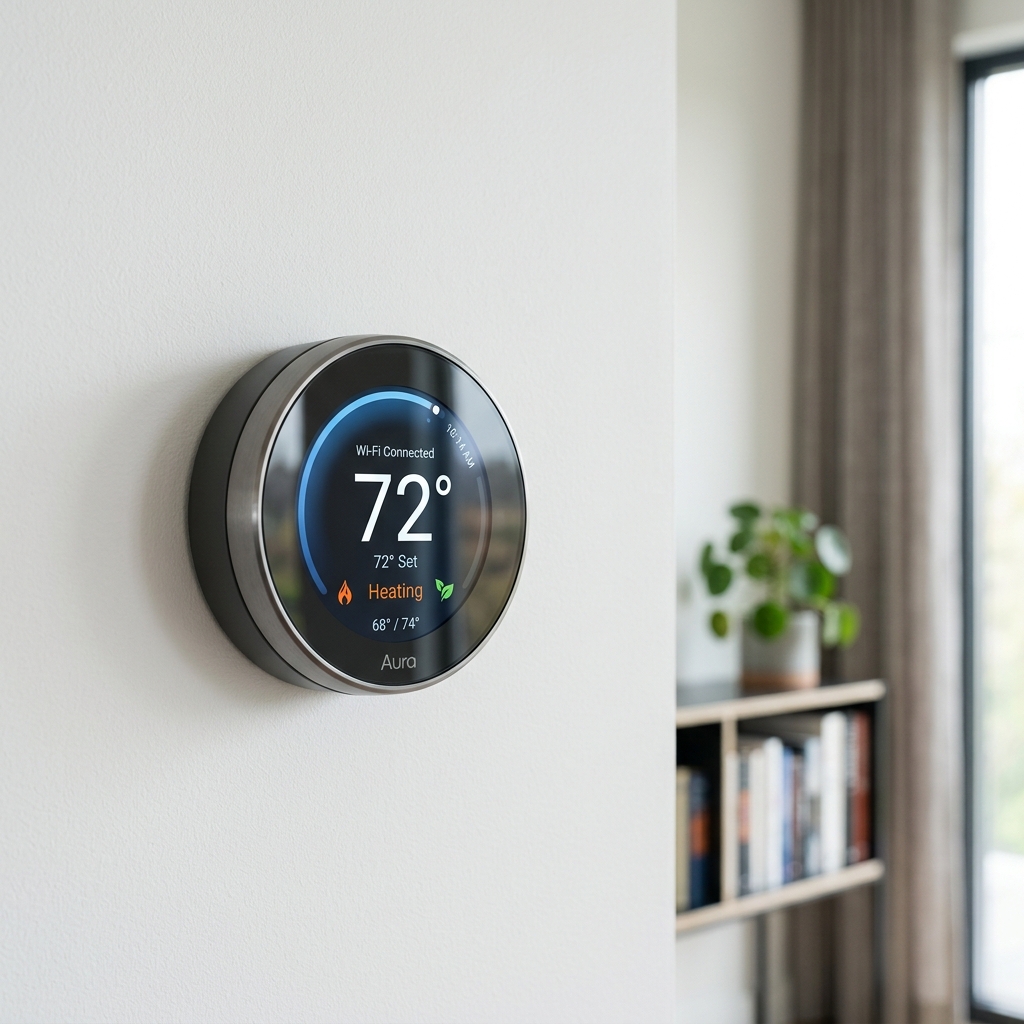
For most homes, the best thermostat setting in winter is about 68°F while you're home and awake. Turn it down 7 to 10 degrees while you sleep or while the house is empty. That balance keeps you comfortable and cuts heating use. Never set it below about 55°F, even when you're away.
That is the short answer. The right number for your home also depends on who lives there, what kind of heating you have and how well the house holds heat. A furnace and a heat pump should be set back in different ways. This guide covers the settings we recommend to homeowners in the Willamette Valley and why they work.
Recommended Winter Thermostat Settings
Use this table as a starting point. Adjust a degree or two at a time until it feels right for your family.
| Situation | Suggested Setting | Notes |
|---|---|---|
| Home and awake | 68°F | Try a sweater before you turn it up |
| Sleeping | 60°F to 65°F | Most people sleep better in a cooler room |
| Away at work or school | 60°F to 62°F | Schedule it to warm up before you get home |
| Away for several days | 55°F to 58°F | Low enough to save energy, warm enough for pipes |
| Babies, older adults or anyone ill | 68°F to 72°F | Comfort and health come before savings |
| Heat pump setback | 2 to 4 degrees lower | Smaller setbacks avoid backup heat |
Why 68°F Is the Usual Answer
Your home loses heat faster when the gap between indoor and outdoor temperature is bigger. Every degree you lower the setting slows that loss and cuts how long your system runs. The U.S. Department of Energy says turning the thermostat back 7 to 10 degrees for 8 hours a day can trim yearly heating and cooling use by up to 10 percent.
68°F is the point where most people feel comfortable in normal indoor clothes. Going higher uses more energy for a small gain in comfort. Going much lower can make the house feel damp and chilly, which is a real issue in our wet Oregon winters.
Furnace vs. Heat Pump: Set Back Differently
A gas furnace can bring a cold house back up to temperature quickly. That makes it a good fit for deeper setbacks at night and during the workday. Set it lower, then schedule it to warm the house about 30 minutes before you wake up or come home.
A heat pump works best when it runs steadily. If you drop the temperature 8 or 10 degrees and then raise it all at once, many systems turn on the backup electric heat strips to catch up. Those strips use far more electricity than the heat pump itself, which can erase your savings. With a heat pump, keep setbacks small, around 2 to 4 degrees. Many smart thermostats have an adaptive recovery feature that warms the house slowly so the backup heat stays off.
How to Set Up a Winter Schedule
- Pick your comfort temperature. Start at 68°F for the hours you're home and awake.
- Set a sleep temperature. Drop it a few degrees about an hour before bed. Extra blankets make up the difference.
- Set an away temperature. If the house is empty for 8 hours or more, lower it for that block.
- Schedule the warm-up early. Have the heat come back on about 30 minutes before you wake or arrive home.
- Avoid cranking it up. Setting 80°F won't heat the house faster. Most systems deliver heat at the same speed no matter how high you set it.
- Check it after a week. If mornings feel cold, move the warm-up time earlier instead of raising the setting.
Tips for Damp Willamette Valley Winters
- Watch for condensation. A very cold house plus our wet air can lead to fogged windows and mold. If you see this, raise the setting a little and run bath and kitchen fans.
- Don't go below 55°F. Pipes in crawl spaces and outside walls can freeze during a cold snap, even in Silverton and Salem.
- Keep vents open. Closing registers in unused rooms raises duct pressure and makes the system work harder.
- Use ceiling fans on low, clockwise. This pushes warm air down from the ceiling without a draft.
- Seal drafts. Weatherstripping and door sweeps let you keep a lower setting and still feel warm.
- Change the filter. A clean filter helps the system heat evenly so you don't need to turn it up.
When the Setting Isn't the Problem
If the house never reaches the temperature you set, or the thermostat reads a few degrees off, something else is going on. Start with our thermostat troubleshooting guide. Don't open the furnace or work on thermostat wiring yourself. Call a licensed technician for anything electrical.
Is a Smart Thermostat Worth It?
A programmable or smart thermostat makes all of this automatic. You set the schedule once and it handles setbacks every day. Smart models can learn your routine, adjust when you leave and let you change the setting from your phone. Many also handle heat pump recovery the right way. Most smart thermostats need a C-wire for steady power, so installation is best left to a pro.
Elevated Air installs and sets up thermostats and controls in Silverton, Salem, Stayton, Woodburn, Keizer and nearby towns. We can program a schedule that fits your system and your family. Contact us to set up a visit.
Frequently Asked Questions
What is a good thermostat setting for sleeping in winter?
Most people sleep well between 60°F and 65°F. A cooler bedroom helps your body rest, and it saves energy for several hours each night. Keep it warmer for babies, older adults or anyone who is sick.
Is it cheaper to leave the heat at one temperature all day?
With a furnace, no. Lowering the temperature while you sleep or are away uses less energy, even after the system warms the house back up. With a heat pump, small setbacks still help, but big ones can trigger backup heat. Keep heat pump setbacks to a few degrees.
How low can I set my thermostat when I go on vacation?
Set it to about 55°F to 58°F. That saves energy while keeping pipes from freezing and helping prevent moisture problems. Don't turn the heat off completely during an Oregon winter.
