
If your CO alarm goes off, or anyone in the house has headaches, dizziness or nausea that ease when they step outside, get everyone out now. Call 911 from outside. Don't go back in, and don't try to find the source.
A gas furnace that is working right sends its exhaust safely outdoors. When something goes wrong with the burners, the heat exchanger or the venting, carbon monoxide (CO) can end up in your living space. CO has no color, no smell and no taste. You won't know it's there without a working alarm. This guide covers how it happens, the warning signs, and how to protect your family.
How a Furnace Can Leak Carbon Monoxide
Any appliance that burns gas, propane, oil or wood makes some CO. A healthy furnace keeps that exhaust sealed off from the air it blows through your home and pushes it out the vent. Problems start when that system breaks down:
- A cracked heat exchanger. The heat exchanger is the metal wall between the flame and your household air. Years of heating and cooling can crack it. A crack can let exhaust mix into the air going to your rooms.
- Blocked or damaged venting. A flue pipe that is disconnected, rusted through or blocked by a bird nest, debris or snow can send exhaust back into the house.
- Poor combustion. Dirty burners, the wrong gas pressure or not enough air for the flame can make the furnace produce much more CO than normal.
- Back drafting. In a tight house, strong exhaust fans or a fireplace can pull air down the furnace vent instead of letting it rise.
Symptoms of Carbon Monoxide Exposure
Early CO symptoms feel a lot like the flu. That's why it's easy to miss. Pay attention to patterns, not just single symptoms.
| What You Notice | Why It Matters |
|---|---|
| Headache, dizziness, tiredness | The most common early signs of CO exposure |
| Nausea, shortness of breath, confusion | Signs that exposure may be getting worse |
| Several people or pets feel sick at once | A shared cause in the home is more likely than a virus |
| You feel better away from home | Points to something in the house, not an illness |
| Symptoms start when the heat comes on | Points toward the furnace or another heating appliance |
Anyone with these symptoms should get to fresh air and get medical care. Tell the doctor you suspect carbon monoxide. Young children, older adults, pregnant women, people with heart or lung conditions and pets can be affected sooner.
Warning Signs at the Furnace
These signs don't prove there is CO in your home. They do mean the furnace needs a professional inspection soon. Look, but don't touch or take anything apart.
- A yellow, orange or flickering flame. A healthy gas flame is steady and mostly blue.
- Soot or dark streaks around the furnace, the burner area or the vent pipe.
- Heavy moisture on nearby windows or walls when the heat runs.
- A vent pipe that is loose, sagging, rusted or separated at a joint.
- A pilot light that keeps going out, which can point to a draft or combustion problem.
- A stale or burning smell when the heat is on. CO itself has no smell, but other exhaust gases can.
If you see any of these, turn the thermostat off and call a licensed HVAC technician. Never try to repair a gas line, burner, heat exchanger or vent pipe yourself. These parts need the right training and test tools.
Where to Put CO Alarms
A working CO alarm is the only reliable way to know CO is present. Oregon requires CO alarms in homes that have a CO source, such as a gas furnace, gas water heater, fireplace or attached garage. Good placement looks like this:
- On every level of the home, including the basement.
- Outside each sleeping area, close enough to wake people up.
- Follow the alarm maker's instructions for height and distance from the furnace, water heater and kitchen.
- Keep alarms away from bathrooms, direct sun and spots right next to fuel-burning appliances, where false alarms are more likely.
Test each alarm once a month with the test button. Replace batteries as the maker recommends. CO alarms also wear out, so replace the whole unit by the date printed on it. Combination smoke and CO alarms are fine as long as they are placed correctly.
What to Do if Your CO Alarm Sounds
- Get everyone out right away, including pets. Don't stop to look for the source.
- Call 911 from outside or from a neighbor's home. If you smell gas, call the gas utility's emergency line as well.
- Get medical help for anyone who feels sick.
- Stay out until the fire department says the home is safe.
- Don't turn the furnace back on until a licensed technician has inspected it.
If the alarm chirps instead of sounding a full alarm, that usually means a low battery or an alarm at the end of its life. Check the manual to tell the two sounds apart. When in doubt, treat it as a real alarm.
What a Furnace Safety Inspection Covers
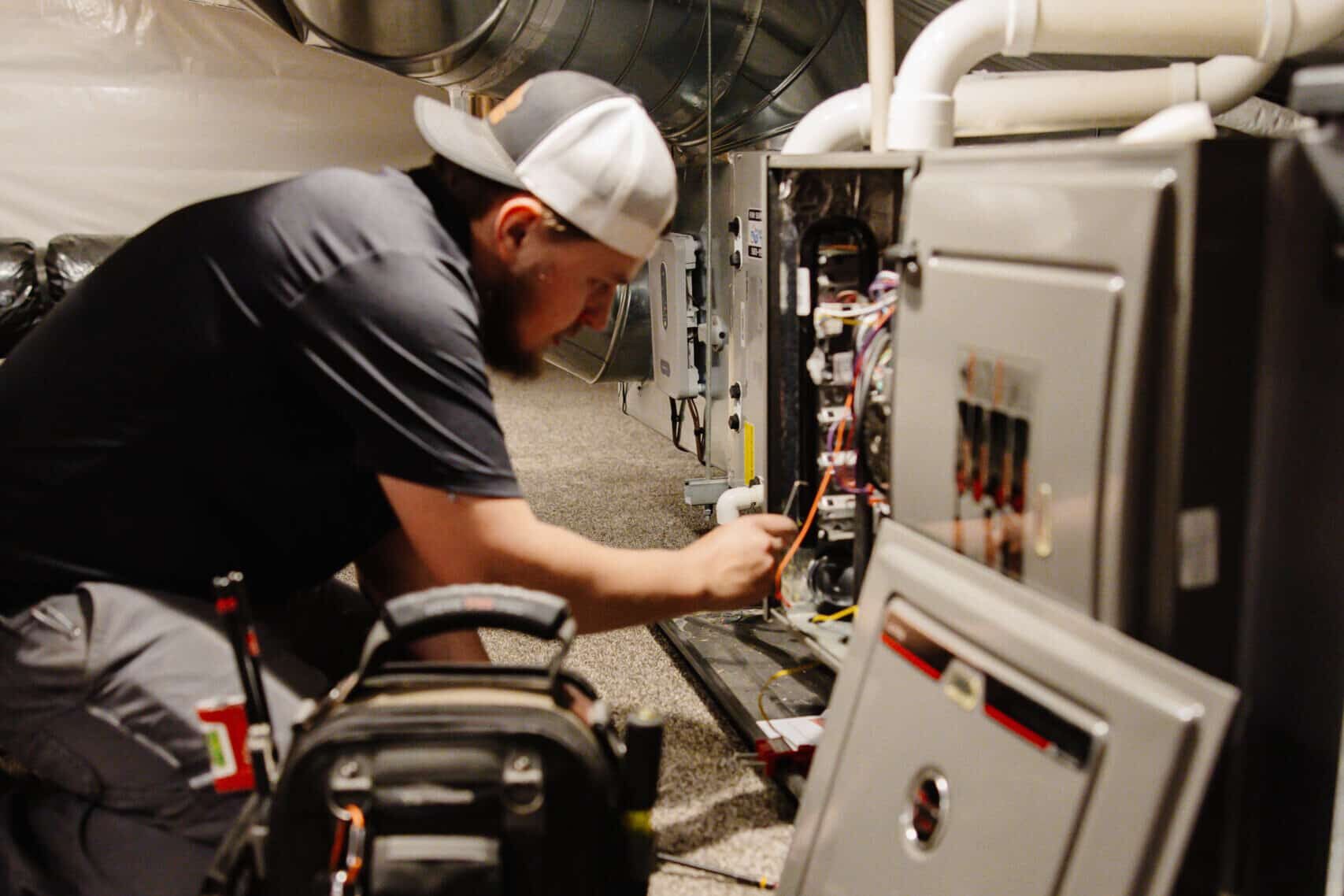
A licensed technician checks the heat exchanger for cracks, inspects the vent pipe and connections, cleans and adjusts the burners, checks gas pressure and tests for CO and proper draft. This is part of every heating tune-up we do.
How to Prevent CO Problems
- Have your furnace inspected every year, ideally in the fall before heavy use.
- Change the air filter on schedule. Poor airflow makes the furnace run hot, which stresses the heat exchanger over time.
- Keep the area around the furnace clear. Don't store boxes, paint or cleaners against it.
- Keep outside vents clear of leaves, plants and snow. On high-efficiency furnaces, check the white PVC pipes outside.
- Never run a car, generator or grill in a garage or inside the home, even with the door open.
- Watch the pilot or burner flame. If you see a yellow pilot flame, read our guide on pilot light problems and have it checked.
Older furnaces deserve extra attention. As a furnace ages, the heat exchanger is more likely to crack. If yours has years of service behind it, a careful yearly inspection matters even more.
Elevated Air inspects and repairs gas furnaces in Silverton, Salem, Stayton, Woodburn, Keizer and nearby Willamette Valley towns. If your furnace is showing warning signs, contact us to set up an inspection.
Frequently Asked Questions
Can a furnace leak carbon monoxide when it is off?
A furnace that isn't burning gas isn't making CO. But other appliances can, like a gas water heater that shares the same vent. If your alarm sounds while the furnace is off, still get out and call 911. Don't assume the alarm is wrong.
Will I smell a carbon monoxide leak from my furnace?
No. CO has no odor. The rotten egg smell people notice is an additive put in natural gas so leaks can be detected. That smell means a gas leak, not CO. Both are emergencies. Only a CO alarm can warn you about carbon monoxide.
How often should my furnace be checked for CO?
Once a year, as part of a professional furnace inspection. Have it checked sooner if you notice soot, a yellow flame, a damaged vent pipe or unexplained symptoms at home. Test your CO alarms every month in between.
