
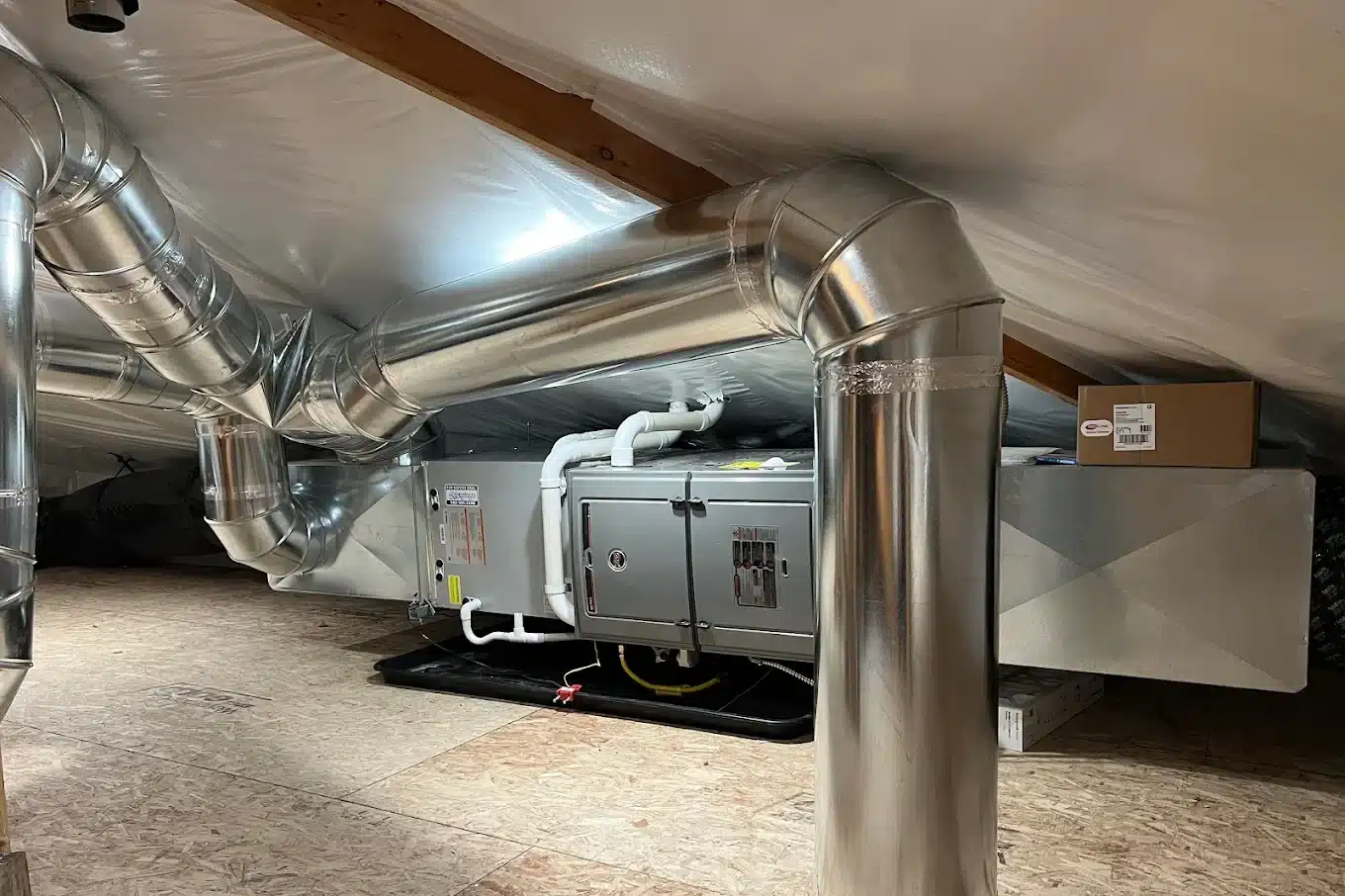
If your furnace lights for a few seconds and then shuts off, it is not proving the flame. The control board can't confirm the gas lit, so it closes the gas valve for safety. The most common cause is a dirty or failing flame sensor.
What Does a Furnace Flame Sensor Do?
It proves the burners lit. The flame sensor is a thin metal rod that sits in the burner flame. The control board sends a very small electrical current through the flame to the sensor. If the current comes back, the board knows there is a flame and keeps the gas on. If it doesn't, the board assumes gas is flowing without burning and shuts it off within seconds.
What Are the Signs of a Bad Flame Sensor?
- The burners light, run for a few seconds, then shut off.
- The furnace tries again two or three times.
- Then it stops trying, a light on the control board blinks a code, and the house cools off.
- It works some days and not others, often worse on the first cold mornings of the season.
Why Do Flame Sensors Fail?
- Buildup on the rod. Over time a film forms on the sensor and weakens the signal. This is the most common cause.
- A cracked ceramic base or a worn rod. The sensor needs replacing, not cleaning.
- A poor ground. The signal returns through the furnace's ground. A loose or corroded ground looks like a bad sensor.
- Poor combustion. A flame that isn't burning cleanly coats the sensor faster. If a sensor gets dirty again quickly, the real problem is the flame.
What Else Makes a Furnace Light and Shut Off?
The flame sensor is the most common cause, but not the only one. The pattern and the blinking code tell a technician which it is:
- A weak hot surface igniter: the burners light late or not at all.
- A pressure switch or inducer problem: often a blocked vent or a clogged condensate drain on high-efficiency furnaces.
- A high-limit switch: the furnace overheats, often from a clogged filter or closed vents, and shuts the burners off.
- Gas pressure: too low for a steady flame.
Is It Safe to Keep Resetting the Furnace?
No. Each reset sends gas back into the burners on a furnace that already failed to prove a flame. The lockout is a safety feature. Resetting it repeatedly hides the cause, and some of those causes, like a blocked vent, are carbon monoxide risks. If you smell gas or your CO alarm sounds, leave the house and call 911 or NW Natural from outside.
What Does a Technician Do?
- Reads the fault code and watches a full startup
- Measures the flame signal, so the sensor is tested, not guessed at
- Cleans or replaces the sensor and checks the ground
- Checks the flame, gas pressure and venting to find why the sensor got dirty
- Tests the igniter, pressure switch and limit switch while the panel is open
Cleaning the flame sensor is part of every heating tune-up we do, which is why a yearly tune-up prevents most mid-winter lockouts. See our heating services.
Frequently Asked Questions
How do I know if it is the flame sensor?
The classic sign is burners that light, run a few seconds and shut off, then retry. A technician confirms it by measuring the flame signal and reading the furnace's fault code.
Can a flame sensor be cleaned, or does it need replacing?
A sensor with buildup can usually be cleaned. One with a cracked base or a worn rod is replaced. Either way, the technician should also check why it got dirty.
Why does my furnace work after a reset, then stop again?
The reset clears the lockout, not the cause. If the sensor or another part is failing, the furnace locks out again. That pattern is the time to call.
