
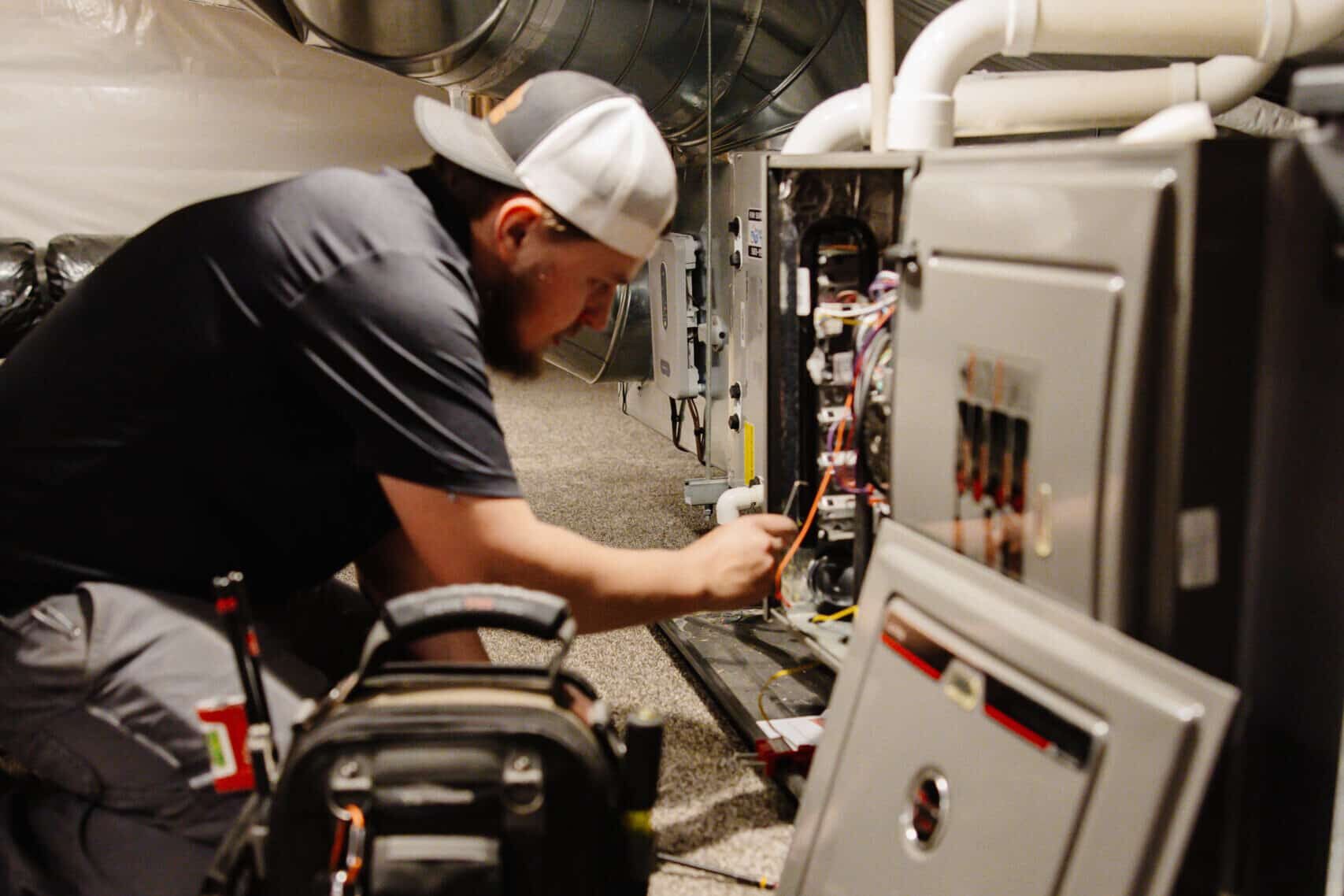
A puddle around your furnace is common, and it's almost never the furnace burning water. It's condensation that isn't draining where it should. Here's how to find the source.
First: Is It a High-Efficiency Furnace?
Look at the vent pipes coming out of the furnace. White PVC pipes mean you have a high-efficiency (condensing) furnace. These furnaces pull so much heat out of the exhaust that water condenses inside them, sometimes several gallons a day in cold weather. That water is supposed to drain away. A leak means the drain path is blocked or broken. A metal flue pipe means a standard-efficiency furnace, which shouldn't produce water at all, so a leak points somewhere else.
The 5 Most Common Causes
- Clogged condensate line or trap. Algae, sludge and rust build up in the drain line and trap until water backs up and spills out. This is the number one cause.
- Failed condensate pump. If your furnace drains to a small pump instead of straight to a floor drain, the pump's float or motor can fail. Pour a little water in the pump reservoir. If it doesn't kick on, that's your leak.
- Loose or cracked drain hose. Hoses slip off fittings and crack with age, especially where they've been bumped.
- The AC coil above the furnace. In summer, or with a heat pump, the leak may be coming from the cooling coil sitting on top of the furnace. A clogged AC drain or a frozen coil melting off drips down onto the furnace.
- Venting problems on a standard furnace. If a metal flue is too large or poorly sloped, exhaust can cool and condense in the pipe and drip back. This needs a technician, because venting problems can also leak carbon monoxide.
What to Do Right Now
- Turn the furnace off at the thermostat and the power switch to stop more water from building up.
- Mop up and dry the area to protect flooring and keep water away from wiring.
- Check the air filter. A clogged filter can freeze the AC coil in cooling season, which causes leaks once it thaws.
- Look at the condensate pump and hose for an obvious disconnect or a pump that won't run.
Clearing a clogged trap or replacing a condensate pump is a quick repair for a technician. We also flush condensate lines during every heating tune-up, which prevents most of these leaks before they start.
