
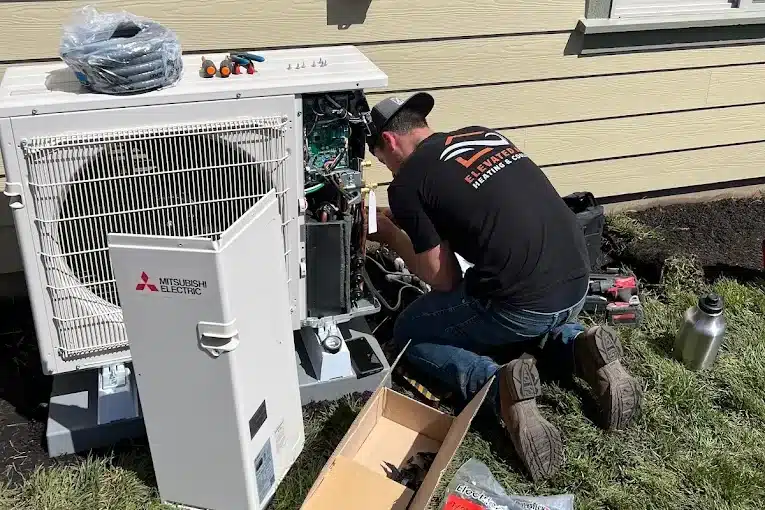
A loud furnace is usually telling you something specific. A bang at startup often points to delayed ignition. A squeal points to the blower motor or belt. A rattle often means a loose panel or part. Some noises are harmless, and some mean you should turn the furnace off and call a technician.
Every furnace makes some sound. You'll hear a soft click, the inducer fan spinning up, a quiet whoosh as the burners light and the steady hum of the blower. What matters is a new sound, a much louder sound or a sound that keeps getting worse. This guide walks through what each common noise means and what you can safely do about it.
Furnace Noises and What They Usually Mean
Use this table to match the sound you hear to its most likely cause. It's a starting point, not a diagnosis.
| Sound | Likely Cause | What to Do |
|---|---|---|
| Loud bang or boom at startup | Delayed ignition from dirty burners or an ignition problem | Turn the furnace off and call a technician |
| Popping or ticking as it heats or cools | Metal ducts expanding and shrinking | Usually normal. Check filter and vents |
| High-pitched squeal or screech | Worn blower belt or failing motor bearings | Schedule a repair soon |
| Grinding or scraping | Motor bearings failing or a part rubbing the blower wheel | Turn the furnace off and call a technician |
| Rattling | Loose access panel, duct or screw. Sometimes a loose inducer fan | Check that panels are seated. Call if it continues |
| Loud humming or buzzing | Failing capacitor, motor or electrical part | Call a technician. Don't open electrical parts |
| Repeated clicking with no heat | Igniter, flame sensor or control problem | Try a reset once. Call if it doesn't light |
| Whistling | Clogged filter or closed vents restricting airflow | Replace the filter and open registers |
| Gurgling on a high-efficiency furnace | Condensate drain or trap partly blocked | Have the drain cleared |
Banging or Booming When the Furnace Starts
This is the noise to take most seriously. When burners are dirty or the igniter is weak, gas can build up for a moment before it lights. Then it lights all at once with a small boom. Over time this can stress the heat exchanger and lead to cracks. A cracked heat exchanger can let carbon monoxide into your home. Turn the thermostat off and call a licensed technician. Don't try to clean or adjust the burners yourself.
A single soft thump after the blower shuts off is different. That is often a duct flexing as air pressure changes. It is usually harmless, but a technician can check it during a tune-up.
Squealing, Screeching or Grinding
Older furnaces often use a belt to drive the blower. When the belt wears or slips, it squeals. Newer furnaces use a direct-drive motor, and a squeal or screech there usually means the motor bearings are wearing out. Grinding is a step further. It can mean metal is rubbing on metal. Running the furnace with a grinding motor can ruin the motor, so turn it off and schedule a repair.
Rattling, Humming and Clicking
- Rattling is often a loose access panel or a loose duct section. If the rattle comes from inside the cabinet, it could be the inducer fan or blower wheel. Those need a technician.
- Humming or buzzing that is louder than normal often comes from a failing capacitor or motor. These parts can hold an electrical charge even with the power off. Leave them to a pro.
- Clicking at startup is normal. Clicking over and over with no flame usually points to the igniter, the flame sensor or the control board. Our guide on resetting a furnace explains what a lockout looks like.
Safe Things You Can Check Yourself
These steps are safe for any homeowner. They fix a lot of airflow noises and help you give a technician better information.
- Replace the air filter. A clogged filter makes the blower strain and whistle. It is the most common cause of airflow noise.
- Open your vents and registers. Closing too many vents raises pressure in the ducts and can cause whistling and booming.
- Make sure the furnace door is on tight. A loose panel rattles, and many furnaces won't run right with the door off.
- Check the thermostat. A furnace that turns on and off every few minutes makes startup noises far more often.
- Note when the noise happens. At startup, while running or at shutdown? This helps the technician find the cause faster.
- Turn the system off at the thermostat if the noise is a bang, grinding or anything that sounds like it's getting worse.
Don't open the burner compartment, touch the gas valve, work on wiring or try to fix a motor. Gas and electrical parts need a licensed technician with the right tools.
When to Call Right Away
Call a technician if you hear banging at startup, grinding or loud buzzing, or if the noise comes with a burning smell, a yellow flame or no heat. Our heating repair team can find the source and fix it safely.
How to Keep Your Furnace Quiet
Most loud furnace problems start small. A yearly tune-up cleans the burners, checks the motor and belt, tightens loose parts and tests safety controls. That catches worn parts before they get noisy or fail on a cold night. Fall is the best time, before the heavy heating season in the Willamette Valley.
Elevated Air repairs and maintains furnaces in Silverton, Salem, Stayton, Woodburn, Keizer and nearby towns. If your furnace has started making a new noise, contact us to set up a visit.
Frequently Asked Questions
Is it safe to run a furnace that is making a loud noise?
It depends on the sound. A light whistle from a dirty filter is not dangerous. A bang at startup, grinding or loud buzzing can mean a part is failing or a safety issue. Turn the furnace off and call a technician for those.
Why does my furnace make a loud noise when it first turns on?
A loud bang at startup is often delayed ignition. Gas builds up before it lights. It can also be ducts flexing as the blower starts. A technician can tell the two apart and clean the burners if needed.
Can a dirty filter make my furnace loud?
Yes. A clogged filter restricts airflow. The blower works harder, and you may hear whistling or a louder rush of air. Replacing the filter is the first thing to try for most airflow noises.
