
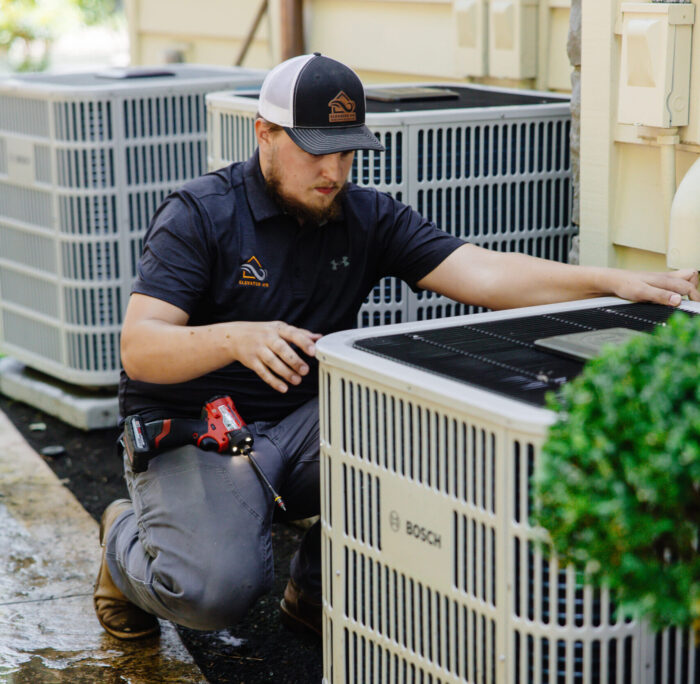
In most cases, no. Outdoor AC units are built to sit in the rain and cold all year. A full plastic or vinyl cover can trap moisture inside the unit, which leads to rust, corrosion and a home for mice. And if your outdoor unit is a heat pump, it heats your home in winter and must never be covered at all.
Covers are sold in every hardware store, so it is easy to think your unit needs one. It does not. Manufacturers design condensers to handle Oregon weather on their own. This guide explains what a cover really does, when it does more harm than good, and what actually protects your system through the winter.
First, Is Your Outdoor Unit an AC or a Heat Pump?
This is the most important question. An air conditioner and a heat pump look almost the same from the outside. Both are metal boxes with a fan on top. The difference is what they do in winter.
An air conditioner only cools. In winter it sits idle while a furnace heats the house. A heat pump both heats and cools. In winter it runs every day, pulling heat from the outside air and moving it indoors. A covered heat pump cannot breathe. It loses heating power, works much harder, and can freeze up or shut down on a safety control. Running it that way can damage the compressor.
Many homes in the Willamette Valley have heat pumps, often paired with a gas furnace as backup. If you are not sure which one you have, look at your thermostat. A setting for "Em Heat" or "Aux Heat" usually means a heat pump. You can also ask us at your next visit. If a heat pump has been covered, the cover needs to come off. If it ran while covered, have a technician look it over.
Why a Full Cover Can Hurt an Air Conditioner
Even on a cooling only unit, a full wrap often causes more problems than it solves.
Trapped moisture. Our winters are long and damp. Water gets under a cover from rain, fog and the ground. A tight cover keeps that moisture in and blocks the airflow that would dry it out. Over months, that damp air works on the coil fins, the cabinet, the fan motor and the electrical parts. Rust and corrosion shorten the life of the unit.
Pests and nests. A covered condenser is a dry, dark and quiet shelter. Mice, rats and insects move in for the winter. Rodents chew wiring and build nests in the base and around the controls. In spring, the first hot day can bring a no cooling call caused by chewed wires.
Mold and odors. Moisture and leaves trapped under a cover can grow mold on the coil and inside the cabinet. That can mean musty smells and a dirtier coil when the system starts up again.
Forgotten covers. It happens often. Someone turns on the AC in May while the cover is still on. The unit overheats in minutes and can trip safety controls or damage the compressor.
What About Debris and Ice?
The two real winter concerns are falling debris and ice. Leaves, pine needles and fir cones collect on top of units all fall in our area. Ice can drip from a roof edge or gutter right onto the fan grille. Heavy icicles can bend fan blades or dent the top.
For an air conditioner only, some technicians are fine with a small solid cap that covers just the top of the unit. It keeps leaves and dripping ice off while leaving the sides open so air can move and moisture can dry. This is very different from a full wrap. Ask your technician if a top cap makes sense for your unit and where it sits. If ice keeps falling on it, the better fix is often a gutter repair or a change to the roof drip line, not a cover.
Cover Types at a Glance
| Option | What It Does | Effect on Lifespan |
|---|---|---|
| No cover | The unit airs out and dries between storms, as designed | Normal lifespan with yearly maintenance |
| Full plastic or vinyl wrap | Traps moisture and gives pests shelter | Can shorten it through rust, corrosion and chewed wires |
| Top only cap (AC only) | Blocks leaves and dripping ice, sides stay open | Neutral to helpful if it fits right |
| Any cover on a heat pump | Blocks the airflow the unit needs to heat your home | Harmful. Strains the compressor and can cause freeze ups |
What Actually Protects Your Unit Over Winter
The best protection is a maintenance visit, not a cover. During a fall or winter visit, a technician looks at the parts that weather and pests go after. On a typical visit we:
- Inspect the cabinet and coil. We look for rust, bent fins, corrosion and debris packed into the coil.
- Check the wiring and controls. We look for loose connections and signs of rodent damage.
- Clean the unit and clear the base. Leaves and debris inside the cabinet hold moisture and block drainage.
- Check that the unit sits level and drains. A sunken pad lets water pool under the unit and freeze.
- Test heat pump defrost. On heat pumps, we confirm the defrost cycle works so the coil does not stay iced over.
- Note any ice or roof runoff problems. We tell you if a gutter or drip line is dumping water on the unit.
Your part is simple: change your air filter on schedule and keep your thermostat settings right for the season. Leave the outdoor unit to a technician. Our AC maintenance service covers cooling systems, and heat pumps get a full check through our heat pump and furnace service.
When to Call a Technician
Call right away if your heat pump is buried in ice and stays that way for hours, if the fan is hitting ice or making a grinding noise, or if the house is not getting warm. Also call if you see chewed wires, a nest inside the unit or a breaker that keeps tripping. If a heat pump ran with a cover on, shut the system off at the thermostat and have it checked. Do not chip ice, pry at the coil or open the unit. Those jobs need training and the right tools.
Winter AC and Heat Pump Service in Silverton and the Willamette Valley
Elevated Air services air conditioners and heat pumps in Silverton, Salem, Stayton, Woodburn, Keizer and nearby towns. We can tell you what kind of outdoor unit you have, whether it needs any protection, and what condition it is in heading into the cold months. Contact us to schedule a visit.
Frequently Asked Questions
Can I cover my heat pump in winter?
No. A heat pump heats your home in winter and needs open airflow on all sides. A cover cuts its heating power, makes it work harder and can lead to ice buildup and compressor damage. If you are worried about snow, ice or roof runoff, have a technician look at the location.
Does covering an AC unit make it last longer?
Usually not. Outdoor units are built for rain and cold. A full cover can shorten their life by trapping moisture and sheltering rodents. Yearly maintenance does far more for lifespan than any cover.
Is it normal for my heat pump to have frost on it in winter?
A light layer of frost is normal on cold, damp days. The unit runs a defrost cycle to clear it, and you may see steam rise from the top. A thick block of ice that does not clear, or ice that covers the whole unit, is not normal. Call a technician if that happens.
