
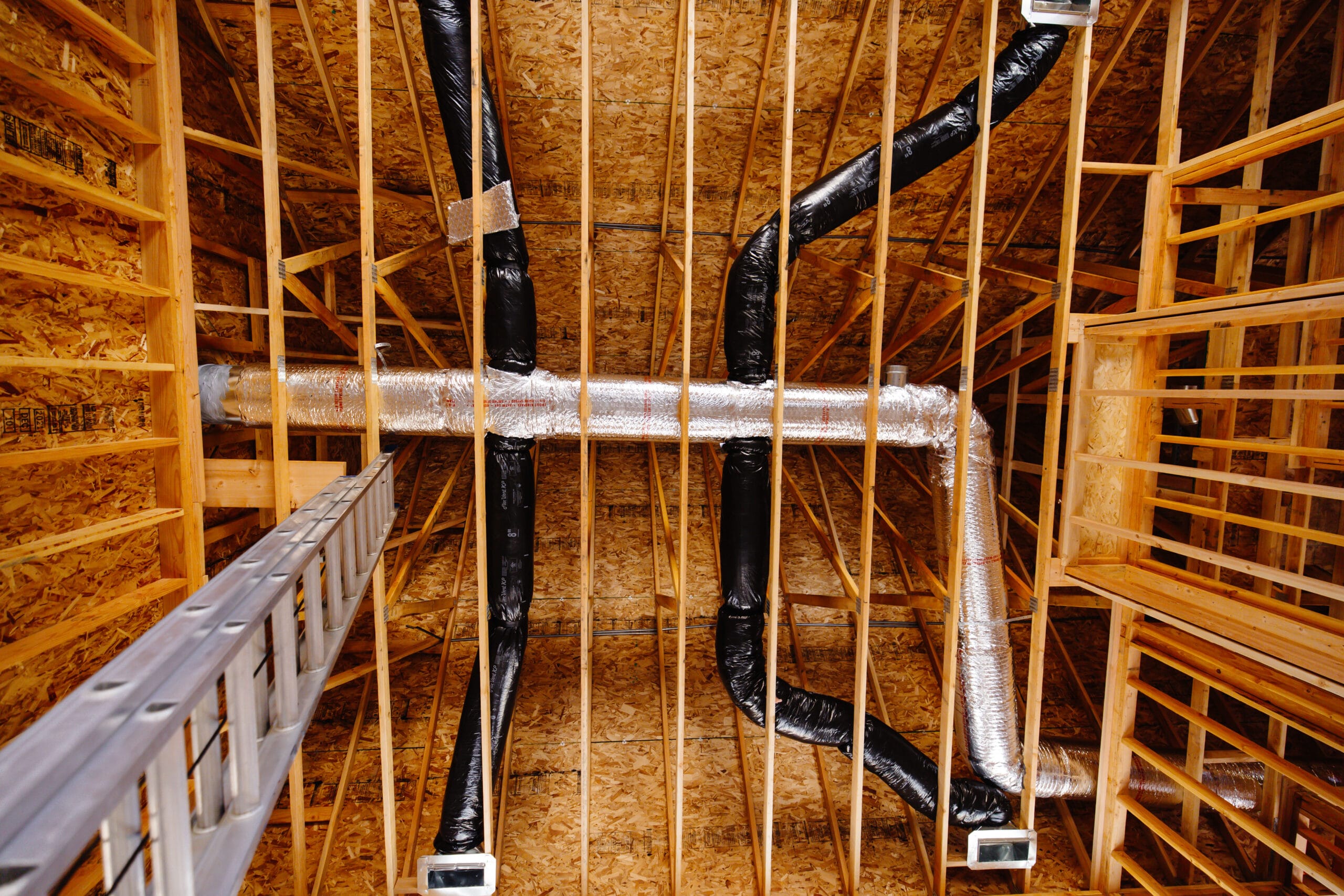
One room is usually colder because it is not getting its share of warm air, or because it loses heat faster than the rest of the house. The most common causes are leaky or crushed ductwork, a long duct run, weak airflow from the system and a room with more outside walls or windows. A technician can measure the airflow and find which one it is.
A cold bedroom or a chilly room over the garage is one of the most common comfort complaints we hear in the Willamette Valley. It is easy to turn the thermostat up and live with it. But that heats the rest of the house too much and runs up your energy use. This guide explains why it happens, what each cause means for your system and when it is worth a call.
How Warm Air Gets to Each Room
A furnace or heat pump heats air in one place. A blower then pushes that air through a network of ducts to every room. Each room gets warm air through a supply vent, and air goes back to the system through return vents.
When the system is designed and working well, every room gets the amount of air it needs to match how fast it loses heat. A cold room means that balance is off. Either too little warm air reaches it, or the room loses heat faster than the air can replace it.
Common Reasons One Room Stays Cold
Leaky or disconnected ducts. Ducts in attics and crawl spaces are out of sight, so problems go unnoticed for years. A joint can pull apart, tape can fail or a section can come loose. Warm air then spills into the attic or crawl space instead of the room. The rooms at the end of that duct line get the least heat.
Crushed, kinked or blocked ducts. Flexible duct is common in Oregon homes. It can get crushed by stored boxes, sag between supports or kink around a framing member. Rodents can also tear or nest in it. Any of these choke the airflow to one room.
A long duct run. The room farthest from the furnace or air handler often gets the weakest airflow. Air loses pressure and heat along the way, especially in an uninsulated attic or a cold crawl space. Bonus rooms over garages and back bedrooms are classic examples.
Closed or blocked vents. A supply vent that is shut or sits behind a couch or bed cannot deliver air well. A room with no return path, such as a bedroom with the door closed and no return vent, can also starve for airflow.
The room itself loses heat faster. Rooms with two or three outside walls, large windows, a floor over a garage or a ceiling under the roof lose heat quickly. Older single pane windows, thin insulation and air leaks around doors all add to it. The ducts may be fine, but the room needs more heat than it was designed to get.
Weak airflow from the system. A clogged filter, a blower that is dirty or set to the wrong speed, or a system that is too small for the house can all lower the total airflow. The rooms closest to the unit may feel fine while the far rooms go cold.
An addition or remodel. When a room is added or a garage is finished, the new space is often tied into the old ductwork without checking whether the system can carry the extra load. That room may never have been heated well.
Thermostat location. If the thermostat sits in the warmest part of the house, such as near a sunny window or the kitchen, it shuts the heat off before the far rooms catch up.
What Each Cause Means at a Glance
| Cause | What You Notice | What It Means |
|---|---|---|
| Leaky or loose ducts | Weak air from one vent, dusty rooms, higher energy use | Paying to heat the attic or crawl space |
| Crushed or kinked duct | Little or no air from one vent | Airflow choked to a single room |
| Long duct run | Far room is always the coldest | Design or balancing issue |
| Room loses heat fast | Drafts, cold walls, cold floor over a garage | Room needs more heat than it gets |
| Low system airflow | Several far rooms cold, long run times | Extra wear on the blower and system |
Why It Is Worth Fixing
A cold room is not only about comfort. Turning the thermostat up to warm one room makes the whole system run longer. That means higher energy use and more wear on the furnace, heat pump and blower motor.
Leaky ducts can also pull in air from the attic or crawl space. That air can carry dust, insulation fibers and moisture into your home. In a gas furnace home, a badly unbalanced duct system can change pressure in the house in ways that are worth having a technician look at.
Space heaters are a common stopgap, but they add load to your electrical circuits and are a fire risk if they run unattended or sit near bedding or curtains. They hide the problem instead of solving it.
What a Technician Does About a Cold Room
Finding the cause takes measurement, not guesswork. On a visit for an uneven heating problem, we typically:
- Measure airflow at the vents. We compare the cold room to the rest of the house to see how much air it actually gets.
- Inspect the ductwork. We follow the duct to the cold room through the attic or crawl space and look for leaks, gaps, crushed sections and missing insulation.
- Check the system itself. We look at the blower, the blower speed setting, the filter and the static pressure in the ducts.
- Look at the room. We note outside walls, windows and the space above or below the room, so we know how much heat it really needs.
- Recommend the right fix. That can be sealing and repairing ducts, balancing the system with dampers, adding or resizing a supply or return, or a ductless mini split for a room the main system cannot reach well.
For a bonus room, an addition or a converted garage, a ductless mini split is often the cleanest answer. It heats and cools that one room on its own, with its own controls. For leaks, crushed runs and balancing, our ductwork service covers the repair and sealing.
Your part is simple: change your air filter on schedule and keep your thermostat set where you are comfortable. Leave the ducts and the system to a technician. Ductwork in attics and crawl spaces is hard to reach, and a repair done wrong can make the airflow worse.
When It Is Urgent
Most cold rooms are a comfort issue, not an emergency. Call right away if the whole house is losing heat, if no air is coming from several vents, or if you smell burning or hear grinding from the furnace or blower. If your CO alarm sounds, leave the house and call 911 from outside. Also call soon if a cold room sits over pipes that could freeze during a hard Oregon cold snap.
Even Heating for Silverton and Willamette Valley Homes
Elevated Air helps homeowners in Silverton, Salem, Stayton, Woodburn, Keizer and nearby towns track down cold rooms and fix the cause. Many homes here have ducts in vented crawl spaces and attics that take years of damp weather and rodents. Contact us to schedule a visit, and we will measure what each room is getting and explain your options.
Frequently Asked Questions
Should I close vents in rooms I do not use to push heat to the cold room?
Usually not. Closing several vents raises pressure in the duct system. That can make leaks worse, strain the blower and, on a heat pump, hurt performance. It rarely sends much extra air to the cold room. A technician can balance the system the right way.
Is it normal for an upstairs room to be colder in winter?
Upstairs rooms are more often too warm in winter, since heat rises. A cold upstairs room often points to a long or leaky duct run through the attic, or poor insulation above the ceiling. A cold room over a garage is very common for the same reasons.
Will a new furnace or heat pump fix a cold room?
Not on its own. If the problem is in the ducts or the room itself, a new system will push air through the same leaks and long runs. That is why we check airflow and ducts first. If the system is too small or failing, replacing it may be part of the answer.
